A Practical Guide to Renting Bikes and Scooters for Everyday Travel
Introduction
Planning a trip often means finding a simple and affordable way to move around. You may need transport for sightseeing, daily work, college, shopping, or a weekend getaway. A rental bike or scooter can help you reach different places without depending entirely on public transport.
Still, renting a vehicle requires more than finding an attractive price. You need to choose the right vehicle, check your documents, understand the rental agreement, and prepare for local road conditions. These steps can help you avoid unexpected costs and travel with greater confidence.https://motoshare.asia/
Bike rental in India can suit many types of travelers. Scooters often work well for short city journeys, while suitable motorcycles may help experienced riders cover longer distances. Bicycles can also provide a useful option for leisure rides and short trips.This guide covers the main factors to consider before renting. You will learn how to compare vehicles, plan your budget, inspect a rental, and avoid common mistakes.
Why More Travelers Consider Vehicle Rentals
Travel needs often change from one day to another. You might need a scooter for local errands today and a car for a family trip next weekend. Renting gives you the option to choose a vehicle according to each journey.
A rental vehicle can help in several situations:
- Tourism: Visit attractions, markets, and local areas at your own pace.
- Commuting: Travel between home, college, work, and other regular destinations.
- Weekend breaks: Explore nearby places when the route and vehicle suit your plans.
- Temporary transportation: Manage travel while your own vehicle needs repairs.
- Short errands: Reach shops, appointments, or meeting locations without arranging separate rides.
However, a rental does not always cost less than public transport. Fuel, parking, deposits, and other fees can increase your expenses. Compare the complete cost and convenience before deciding.
Find a Vehicle That Matches Your Journey
The best vehicle depends on your route, experience, passengers, and luggage. Think about these needs before searching for a rental.
Scooters for City Journeys
Scooters often suit short trips through busy urban areas. Many models use automatic transmissions, which can simplify operation for eligible riders who feel comfortable using them.
Consider storage space, seat comfort, braking performance, and vehicle weight. A scooter should suit both your travel distance and your ability to handle it safely.
Motorcycles for Longer Rides
Motorcycles may suit experienced riders who plan longer journeys on appropriate roads. However, different models offer different levels of power, comfort, and control.
Choose a motorcycle that matches your experience. Check the seat height, weight, riding position, and luggage needs before confirming a rental.
Bicycles for Leisure and Short Trips
A bicycle may suit local exploration, exercise, and short journeys on suitable routes. You can avoid fuel expenses, although rental charges may still apply.
Inspect the brakes, tyres, chain, gears, and lights before riding. Choose a bicycle that fits your height and the planned route.
Compare Your Options
| Travel requirement | Suitable option to consider | Main point to check |
|---|---|---|
| Short city trips | Scooter | Traffic and parking |
| Longer rides | Suitable motorcycle | Riding skills and comfort |
| Leisure travel | Bicycle | Route safety and distance |
| Regular commuting | Scooter or motorcycle | Running costs |
| Travel with several passengers | Suitable car | Seating and luggage capacity |
Use this table as a general guide. Always consider local laws, vehicle availability, road conditions, and your own abilities.
Plan Your Rental Budget Before Booking
Rental prices can vary between providers and destinations. The advertised rate may not include every expense, so review the full payment terms.
Understand the Main Cost Factors
Several factors influence the amount you pay.
Vehicle category: Different models and vehicle types may have different rental rates.
Rental duration: Hourly, daily, and longer bookings may use different pricing structures.
Destination: Prices may vary between cities, tourist areas, and local markets.
Travel dates: Busy periods may affect both prices and vehicle availability.
Mileage limits: Some providers restrict how far you can travel during the rental period.
Fuel or charging: You may need to pay these expenses separately.
Security deposit: Some providers require a deposit before handing over the vehicle.
Additional charges: Late returns, damage, or other contract conditions may create extra expenses.
Not every provider applies the same fees. Read the rental terms and ask about unclear charges before paying.
Work Out the Total Expense
Use this simple calculation to estimate your budget:
Total trip cost = rental fee + fuel or charging + applicable extra fees + other travel expenses
Keep refundable deposits separate from your expected final cost. However, include the deposit when calculating the money you need before pickup.
Compare similar vehicles over the same dates and duration. One provider may charge less per day but offer a lower mileage allowance. Another may charge more while giving you greater flexibility.
Choose the option that fits your travel needs and budget rather than focusing only on the lowest advertised price.
Complete Your Document Checks Early
Document requirements depend on the vehicle, destination, rental provider, and applicable law. Confirm the rules before making a payment.
Check Your Driving Licence
Motorized rentals generally require a valid licence for the relevant vehicle category. A licence for one category may not authorize you to operate another.
If you plan to rent a motorcycle or scooter abroad, check the destination’s requirements. An international driving permit may help in certain circumstances, but it does not replace every underlying licence requirement.
Confirm Your Identity Documents
Providers may request identity proof and other information during booking or pickup. Ask which documents they accept and whether you must present originals.
Make sure your booking information matches your identification documents where required.
Review Age Restrictions
Some providers set minimum age limits or additional conditions for specific vehicles. These rules may differ between locations and rental categories.
Confirm your eligibility before paying any booking fee or deposit.
Inspect Every Vehicle Before You Leave
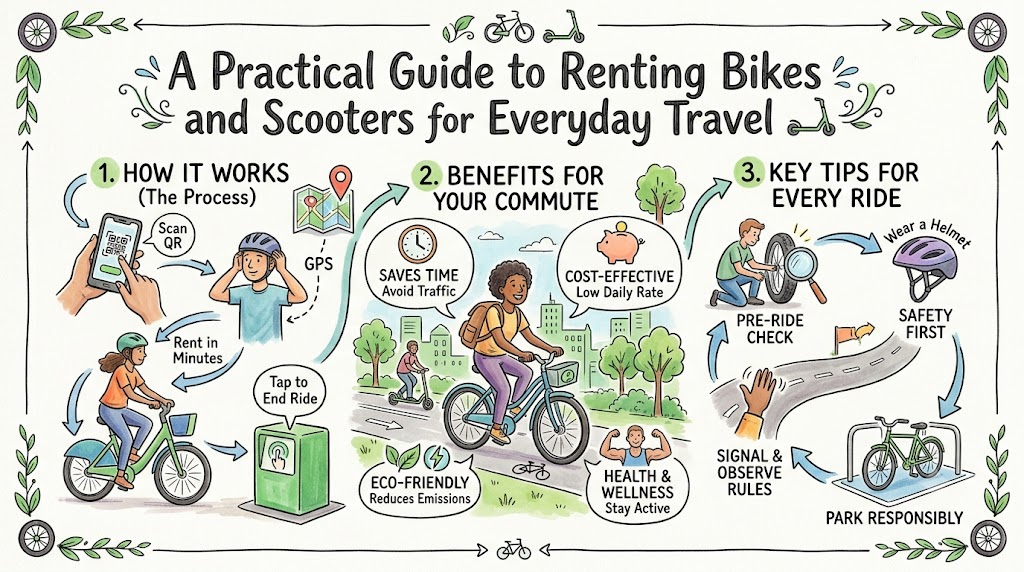
A vehicle inspection helps you identify visible damage and possible safety problems before departure. Take a few minutes to check the important parts.
- Examine the bodywork: Look for scratches, dents, cracks, and broken mirrors.
- Check the tyres: Look for visible damage and worn tread.
- Test the brakes: Make sure the brakes respond properly.
- Inspect the lights: Check the headlights, indicators, and brake lights.
- Review the controls: Check the steering and other controls for obvious problems.
- Record the fuel level: Confirm the starting level and return requirements.
- Photograph existing damage: Take clear pictures before leaving.
- Check safety equipment: Confirm that you have a suitable helmet and any required equipment.
Report damage or mechanical concerns to the provider before departure. Ask them to record existing issues in the rental documentation.
Never use a vehicle with a serious safety defect. Request another vehicle or follow the provider’s process for resolving the issue.
Read the Rental Agreement Carefully
A rental agreement explains your responsibilities, payment conditions, and return requirements. Read it before accepting the vehicle.
Security Deposits and Refunds
Some providers collect a refundable deposit. Check the amount, payment method, refund timeline, and possible deductions.
Ask what happens if the provider finds damage or another issue during the return inspection. Keep your payment receipts and rental records until the deposit has been settled.
Insurance and Damage Responsibilities
Never assume that the rental includes complete insurance protection. Coverage, exclusions, deductibles, and claim procedures can vary.
Ask which risks the policy covers and which costs you may need to pay. Understand how to report an accident or vehicle damage.
Review the written conditions instead of relying only on verbal explanations. If you do not understand a term, ask the provider to explain it before you agree.
Pickup and Return Conditions
Confirm the pickup time, return deadline, and return location. Ask about late fees and the process for extending your rental.
Check the fuel or charging policy before starting your journey. If your travel plans change, contact the provider early and request approval for any extension.
Make Safety Part of Your Travel Plan
A rental vehicle may handle differently from the one you usually use. Familiarize yourself with its controls before entering busy traffic.
Follow these practical safety measures:
- Wear a properly fitted helmet that meets applicable safety standards.
- Follow local traffic laws and posted speed limits.
- Maintain a safe distance from other vehicles.
- Signal before turning or changing lanes.
- Avoid using your phone while riding.
- Never ride under the influence of alcohol or drugs.
- Follow legal passenger limits.
- Check the weather before longer journeys.
- Stop safely when you feel tired.
- Keep emergency contact details available.
Rain, fog, poor lighting, and uneven roads can increase the risks of riding. Change your route or delay your journey when conditions become unsafe.
If you lack experience with a particular vehicle, practise basic handling in a safe and permitted area. Choose a vehicle you can control comfortably.
Mistakes That Can Increase Rental Costs
A few simple checks can help you avoid unnecessary expenses and disagreements.
1. Choosing Only by Price
A low daily rate may exclude fuel, deposits, or other fees. Compare the full expected cost before booking.
2. Forgetting Mileage Limits
Some rental agreements limit travel distance. Check the allowance if you plan to visit several destinations.
3. Skipping the Condition Check
Unrecorded damage can cause disagreements when you return the vehicle. Photograph existing issues and report them before departure.
4. Overlooking Insurance Exclusions
An insurance policy may exclude certain events or require specific reporting steps. Read the terms and understand your responsibilities.
5. Returning the Vehicle Late
Late returns may result in additional charges. Allow enough time for traffic, fuel arrangements, and the return inspection.
6. Ignoring Cancellation Terms
Unexpected events can change your plans. Check the cancellation deadline and refund conditions before paying.
Prepare for Your Destination
Local conditions can affect both your vehicle choice and your travel plans. Research your destination before collecting the rental.
Busy cities may have heavy traffic and limited parking. Rural areas may have uneven roads, fewer fuel stations, or poor lighting. Hill routes may require more experience and careful preparation.
Check local traffic rules, road conditions, parking restrictions, and weather forecasts. Make sure your planned route suits your vehicle and riding ability.
If you intend to cross an international border, obtain explicit permission from the provider. Confirm the legal, insurance, and documentation requirements before travelling.
Also, learn how to contact the provider if the vehicle breaks down. Keep emergency details accessible and understand the process for reporting an accident.
Exploring Rental Options Through MotoShare.asia
MotoShare.asia focuses on connecting users with vehicle-rental options across India and other Asian destinations. Its intended categories include motorcycles, scooters, cars, and bicycles.
When using a vehicle-rental marketplace, begin with your destination, travel dates, vehicle preference, and expected rental duration. Compare the available options and review the conditions associated with each one.
Before confirming a booking, check the vehicle’s availability, pickup arrangements, total cost, document requirements, deposit conditions, insurance details, and return policy.
Do not assume that every vehicle category operates in every destination. Confirm the specific arrangements with the relevant provider before making a payment.
Frequently Asked Questions (FAQs)
1. Is renting a bike useful for city travel in India?
Yes, a rental bike or scooter can help you travel between local destinations. Consider traffic, parking, riding experience, licence requirements, and total costs before choosing.
2. Which is better for city travel: a scooter or motorcycle?
A scooter may suit short journeys, while a suitable motorcycle may work better for some longer trips. Your experience, comfort, route, and luggage needs should guide your decision.
3. Can I arrange a bike rental online?
Some rental marketplaces and providers allow users to explore vehicles and arrange bookings online. Confirm availability, payment terms, documentation, and pickup details before completing the process.
4. What documents do I need for a scooter rental?
You may need a valid driving licence and accepted identity documents. The exact requirements depend on local laws and the rental provider.
5. Can international visitors rent a motorcycle in India?
International visitors must meet India’s applicable driving requirements. Check whether your licence and any required international driving permit meet the rules for your circumstances.
6. Why do bike rental prices vary?
Prices may depend on the vehicle, location, duration, travel dates, and mileage allowance. Fuel, deposits, and additional charges can also affect the total expense.
7. Will I need to pay a security deposit?
Some providers require a deposit, while others may use different arrangements. Check the amount, refund process, and possible deductions before booking.
8. Does the rental fee include insurance?
Insurance arrangements vary between providers. Review the policy to understand coverage, exclusions, deductibles, and your responsibilities after an accident.
9. How can I check a rental bike’s condition?
Inspect the tyres, brakes, lights, mirrors, controls, and bodywork. Photograph existing damage and report safety concerns before leaving.
10. Can I extend my rental after booking?
An extension may be possible if the provider approves it and the vehicle remains available. Contact the provider before the return deadline and confirm additional charges.
11. What should I do if I cannot return the vehicle on time?
Contact the provider as soon as possible. Request an extension and ask about extra charges rather than assuming that a late return is acceptable.
12. How do I choose a suitable rental provider?
Compare the total cost, vehicle condition, document requirements, insurance terms, deposit rules, mileage limits, cancellation policy, and customer support. Confirm important details before paying.
Final Thoughts
A successful rental experience starts with good preparation. Choose a vehicle that matches your journey, riding skills, budget, and local road conditions.Compare the complete cost, check your documents, inspect the vehicle, and read the rental agreement. Pay particular attention to insurance conditions, deposits, mileage limits, and return deadlines.Whether you need transportation for daily commuting, sightseeing, or a weekend trip, careful planning can help you make a better choice. Confirm the details before booking and always put road safety first.
Leave a Reply