Smart Money Management: A Practical Guide to Budgeting, Expense Tracking, and Saving in India
Introduction
Your salary may arrive on time, yet your bank balance can shrink faster than expected. Grocery shopping, transport, online purchases, monthly bills, and automatic subscription payments all compete for your money. Without clear records, it becomes difficult to know which expenses deserve attention.
A simple money management system can help you take control. You can track your spending, plan essential costs, manage recurring payments, and set realistic savings goals without making your life complicated.
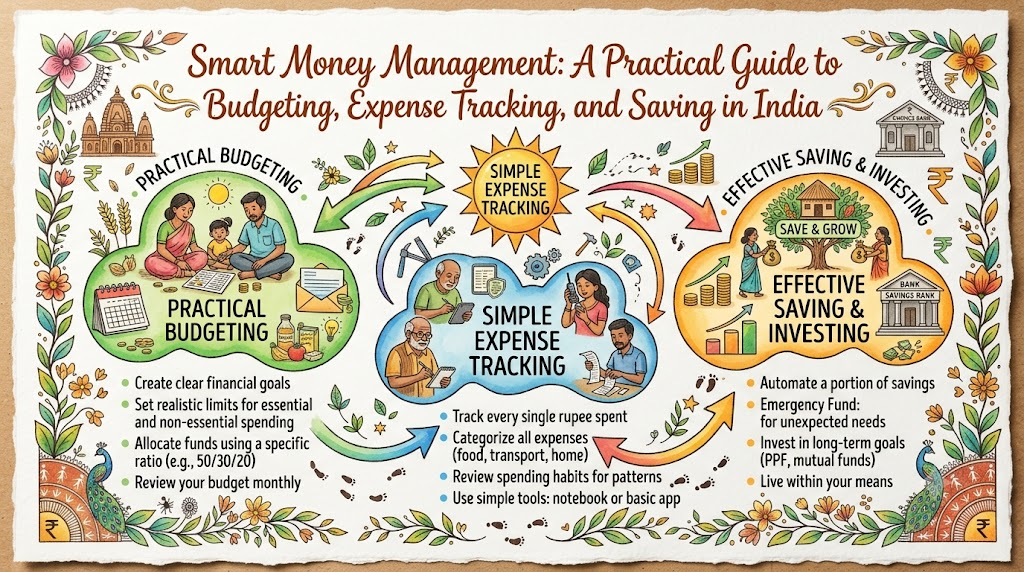
For Indian households, students, young professionals, and freelancers, these habits can make monthly finances easier to manage. This guide explains how to organize your money, build a useful budget, reduce avoidable expenses, and review your financial progress with confidence.
Why Good Money Management Matters
Money management involves planning how you earn, spend, save, and use your available funds. It helps you make informed choices instead of reacting to every bill or unexpected purchase.
A clear financial plan offers several practical benefits.
- Better spending control: You can see which categories consume most of your income.
- More consistent savings: You can set aside money according to your needs and capacity.
- Fewer financial surprises: You can prepare for annual bills, renewals, and planned purchases.
- Improved debt management: You can track repayments and understand their effect on your monthly budget.
- Greater financial awareness: You can recognize habits that support or weaken your financial goals.
Consider someone who earns ₹32,000 each month but often struggles before payday. The problem might involve high living costs, frequent small purchases, debt payments, or several recurring subscriptions.
Tracking expenses helps that person identify the real cause before making changes.
Start by Understanding Your Cash Flow
Cash flow describes the money coming into your accounts and the money leaving them. Understanding this movement provides the foundation for a realistic budget.
Calculate Your Available Monthly Income
Begin by listing your regular income sources. Use the salary amount you receive after deductions, rather than your gross salary.
Include other dependable income, such as freelance payments or rental income. If your earnings change each month, use a cautious estimate based on your recent income.
Keep business revenue separate from personal income when you run a business. Revenue does not automatically represent the money available for personal spending.
List Your Financial Commitments
Next, record the expenses you must pay regularly. These may include rent, groceries, electricity, transport, loan instalments, insurance, and education costs.
Add flexible expenses such as entertainment, dining, shopping, and hobbies. Include subscriptions and annual charges as well.
This list helps you understand how much money remains after covering your current commitments.
Calculate Your Monthly Balance
Use this simple formula:
Monthly balance = Total income − Total expenses
Suppose your take-home income is ₹32,000 and your total monthly expenses are ₹27,500.
Your remaining balance is ₹4,500.
That amount may support savings, additional debt repayment, or upcoming expenses. However, first check whether your records include irregular bills and other expected costs.
A positive balance does not automatically mean you can spend the entire amount freely.
Build an Expense Tracking System That Works
Expense tracking means recording your purchases and organizing them into useful categories. The best method is one that fits your daily routine.
You can use a notebook, spreadsheet, budgeting app, or another reliable tracking method.
Choose Useful Expense Categories
Start with a small number of categories. Too many categories can make tracking difficult without improving your decisions.
| Category | Examples |
|---|---|
| Home | Rent, repairs, maintenance |
| Food | Groceries, restaurants, snacks |
| Travel | Fuel, bus fares, taxis |
| Bills | Electricity, mobile, internet |
| Financial obligations | Loan payments, insurance |
| Lifestyle | Shopping, entertainment, hobbies |
| Subscriptions | Streaming, cloud storage, memberships |
| Savings | Emergency reserves, planned purchases |
Create additional categories only when they help you understand your spending.
For example, a freelancer may separate business software and equipment from household expenses. A student may track books, tuition, and travel separately.
Record Transactions Consistently
For every expense, record the date, amount, category, and a short description.
Here is a hypothetical example:
| Expense | Amount |
|---|---|
| Groceries | ₹1,200 |
| Local transport | ₹250 |
| Mobile recharge | ₹299 |
| Restaurant meal | ₹450 |
| Household supplies | ₹350 |
| Total | ₹2,549 |
These figures illustrate how a spending record works. They do not represent typical spending for every household.
Update your records regularly instead of trying to remember an entire month at once. At the end of each week, compare your entries with available bank and payment statements.
Avoid counting the same transaction twice when you combine manual records with imported statements.
Create a Budget Around Your Real Needs
A budget gives every part of your income a purpose. It helps you plan spending before the money leaves your account.
One common starting point is the 50/30/20 rule. This method allocates 50% of take-home income to needs, 30% to wants, and 20% to savings and additional debt repayment.
These percentages provide guidance rather than strict requirements. Your living costs, debt obligations, family needs, and income may require a different plan.
Example of a Monthly Budget
Suppose you earn ₹32,000 after deductions.
| Budget group | Suggested amount |
|---|---|
| Needs: 50% | ₹16,000 |
| Wants: 30% | ₹9,600 |
| Savings and additional debt repayment: 20% | ₹6,400 |
| Total | ₹32,000 |
This example assumes your essential costs fit within the suggested allocation. If rent and necessary bills exceed ₹16,000, adjust the other categories to reflect your circumstances.
Start by covering essential needs and required debt payments. Then decide how much you can save and spend on flexible purchases.
Review your budget each month. A useful budget changes when your financial situation changes.
Find Spending Patterns That Need Attention
Expense records become valuable when you use them to make decisions. Look for patterns instead of judging individual purchases in isolation.
Identify Small, Repeated Purchases
A purchase may seem inexpensive until you repeat it several times each week.
For example, imagine spending ₹120 on snacks five days a week. Across four weeks, the total reaches ₹2,400.
You do not necessarily need to stop buying snacks. You could reduce the frequency or choose a spending limit that better fits your budget.
Compare Planned and Actual Spending
At the end of the month, compare each category with your original budget.
Suppose you planned ₹2,000 for restaurant meals but spent ₹3,200. Review the extra ₹1,200 and determine what caused the difference.
An unexpected family event may explain the increase. Frequent convenience purchases may suggest a habit worth changing.
Use this information to adjust next month’s plan rather than setting an unrealistic target.
Separate Needs From Wants
Essential expenses generally support basic living needs or important obligations. Flexible expenses offer more room for adjustment.
However, circumstances matter. Internet access may be essential for remote work, while a particular entertainment subscription may be optional.
Ask yourself three questions before reducing a cost:
- Does this expense support an important need?
- How often do I use or benefit from it?
- Can I reduce the cost without creating a bigger problem?
These questions encourage practical decisions instead of unnecessary restrictions.
Control Subscriptions and Automatic Payments
Recurring payments can quietly reduce your available income. Common examples include streaming services, gym memberships, cloud storage, software plans, and online learning platforms.
Create a list of every recurring payment you can identify. Include the amount, billing frequency, renewal date, and cancellation terms.
Then review each service.
Calculate the True Cost of Subscriptions
Suppose you pay ₹399 each month for a digital service.
Annual cost = ₹399 × 12 = ₹4,788.
This calculation shows the cost over 12 months at an unchanged price. Your actual payments may differ if the provider changes its pricing or offers a discount.
Repeat this calculation for your other subscriptions. The combined annual total may help you decide which services provide enough value to keep.
Review Free Trials and Renewal Dates
Some free trials begin charging automatically after the trial period ends. Check the terms before registering and note the cancellation deadline.
If you decide to cancel, follow the provider’s process. Check for confirmation and review the next statement to make sure the charge stops when expected.
Do not assume that deleting an app automatically cancels its subscription.
Build Savings Without Ignoring Everyday Needs
Saving money requires a plan that matches your actual income and expenses. A target that leaves you unable to pay essential bills will be difficult to maintain.
Start With an Emergency Fund
An emergency fund helps cover unexpected costs, such as urgent repairs, medical expenses, or a temporary loss of income.
Begin with a manageable target. Then gradually work toward a reserve that reflects your essential monthly expenses, income stability, and family responsibilities.
Keep emergency money accessible and consider the risks and protections associated with the account or financial product you choose.
Plan for Irregular Expenses
Some costs do not arrive every month. Examples include annual insurance premiums, school fees, vehicle maintenance, and planned travel.
Estimate these expenses and divide them into monthly amounts.
For example, if an expected annual bill costs ₹12,000, setting aside ₹1,000 each month can help you prepare for it.
This calculation assumes the amount remains unchanged and you have enough time to save the full sum.
Make Saving a Regular Habit
If your income allows, move a planned amount into savings after receiving your salary. Keep enough money available for bills and other obligations.
When you cannot save your usual amount, review your situation and adjust the target. Consistency matters, but essential needs should come first.
Choose the Right Expense Tracking Tool
A budget planner or personal finance app can make money management easier, but you do not need a complicated tool to begin.
Choose a method that matches your needs.
A notebook works well for: People who prefer manual records and want a simple system.
A spreadsheet works well for: Users who want custom categories, formulas, and monthly comparisons.
An expense tracking app works well for: People who prefer digital records and convenient spending summaries.
A recurring payment tracker works well for: Users who want to organize subscription costs and renewal dates.
Before choosing an app, review its costs, privacy policy, data access, security controls, and available features. Do not assume every app supports automatic bank imports or subscription detection.
If you use a spreadsheet, check formulas and imported data for errors. If you use an app, confirm that its reports match your financial records.
Common Mistakes That Weaken Financial Planning
Even a simple tracking system can produce misleading results when you overlook important details.
1. Ignoring Cash Purchases
Small cash payments can disappear from memory. Record them regularly to maintain a more complete picture of your spending.
2. Forgetting Annual Payments
Annual renewals and occasional bills can disrupt an otherwise balanced budget. Estimate these costs and plan for them in advance.
3. Mixing Business and Personal Expenses
Freelancers and business owners should maintain separate records wherever practical. This makes it easier to review business costs and personal spending.
4. Setting Savings Targets Without Checking Expenses
A large savings target may look attractive but fail in practice. Calculate your actual commitments before deciding how much to save.
5. Canceling Services Without Checking Terms
Some subscriptions require notice or involve contract conditions. Review the terms before canceling and confirm the final billing arrangements.
6. Trusting Every Automated Category
Expense tools may classify a transaction incorrectly. Review unusual entries and correct errors before using reports to make decisions.
7. Counting Transfers as Purchases
Moving money between your own accounts does not represent a new expense. Record the transfer correctly so your spending totals remain accurate.
8. Failing to Review Progress
Recording expenses without reviewing them limits their usefulness. Compare your spending with your budget and identify one or two improvements each month.
Important Considerations for Safe Money Management
Protect Your Financial Data
Expense records can reveal personal habits, income details, and financial commitments. Use appropriate account security and limit access to your records.
Before uploading bank statements to a digital tool, understand how the service stores, processes, and protects your data. Avoid sharing banking passwords, card PINs, UPI PINs, or OTPs.
Check Your Records for Errors
Manual entries may contain mistakes. Imported files may include duplicate payments, missing descriptions, or incorrect dates.
Compare your records with reliable statements and correct discrepancies before calculating totals.
Treat Financial Scores as Guidance
Some services may calculate a financial health score from selected financial details. Such scores can offer a useful overview, but they may not capture every obligation or personal circumstance.
Use them alongside your actual budget, debt commitments, savings, and cash flow.
Recognize the Limits of Budgeting
A budget cannot eliminate every financial risk. Income changes, emergencies, inflation, and unexpected bills can affect your plans.
Review your figures regularly and seek qualified advice when a financial, legal, or tax issue requires specialist support.
How MoneyVoid.com Fits Into Better Financial Planning
MoneyVoid.com focuses on financial awareness, expense analysis, recurring payment management, budget planning, and financial health assessment.
These areas support the practical habits covered in this article. Organized expense records can help individuals review their spending, while businesses can use cost records to understand their financial commitments.
The platform’s described direction also includes tools and information for reviewing recurring expenses and financial risks. However, readers should verify the availability of specific features before relying on them.
You can begin improving your finances with a basic spreadsheet or notebook. Consistent records and careful reviews matter more than choosing an elaborate system.
Frequently Asked Questions (FAQs)
1. How can beginners start managing money?
Begin by recording monthly income and expenses. Group purchases into categories, identify essential commitments, and create a realistic spending plan. Review your progress every week.
2. Which expense tracking method works best in India?
A notebook, spreadsheet, or suitable budgeting app can all work well. Choose a method that fits your routine, privacy preferences, and financial needs.
3. How can I manage my money when my salary is low?
Prioritize essential expenses and required debt payments. Review flexible spending, plan for irregular bills, and set a savings target that fits your available income.
4. What is the 50/30/20 budgeting rule?
The rule suggests allocating 50% of take-home income to needs, 30% to wants, and 20% to savings and additional debt repayment. Adjust the percentages when your circumstances require a different balance.
5. How do I calculate monthly spending?
Add your recorded expenses for the month and remove duplicate entries. Check bank and payment statements to improve accuracy, then group spending into categories for easier analysis.
6. How can I reduce unnecessary monthly expenses?
Review repeated purchases, unused subscriptions, duplicate services, and avoidable fees. Reduce costs that provide limited value while protecting essential needs and important obligations.
7. How can I track recurring payments?
Maintain a list of subscriptions, memberships, automatic bills, and other regular charges. Record each payment’s amount, billing frequency, renewal date, and cancellation terms.
8. How much should I keep in an emergency fund?
Your target depends on essential expenses, income stability, dependents, and other financial obligations. Start with an achievable amount and build your reserve gradually.
9. Are free budgeting apps reliable?
Some free apps can support basic expense tracking, but reliability varies. Review their privacy practices, available features, calculation accuracy, and data access before using them.
10. How should freelancers track their finances?
Record business income, business expenses, personal income, and household spending separately where possible. Plan for irregular payments and set aside money for upcoming tax obligations based on your circumstances.
11. What should I do when I spend more than my budget allows?
Check whether the difference came from an emergency, a recording error, or a repeated spending habit. Adjust future limits and review expenses you can reasonably reduce.
12. Can financial tracking improve my savings?
Financial tracking can help you identify potential savings opportunities, but it cannot guarantee a particular result. Your progress depends on your income, obligations, spending choices, and ability to follow your plan.
Conclusion
Strong money habits begin with understanding your financial choices. Record your spending, plan for essential costs, review subscriptions, and set savings targets that fit your circumstances.
You do not need to change everything in one day. Start with one clear budget and a regular review routine. As your records improve, you can make more informed decisions about spending, saving, and preparing for future needs.
Leave a Reply