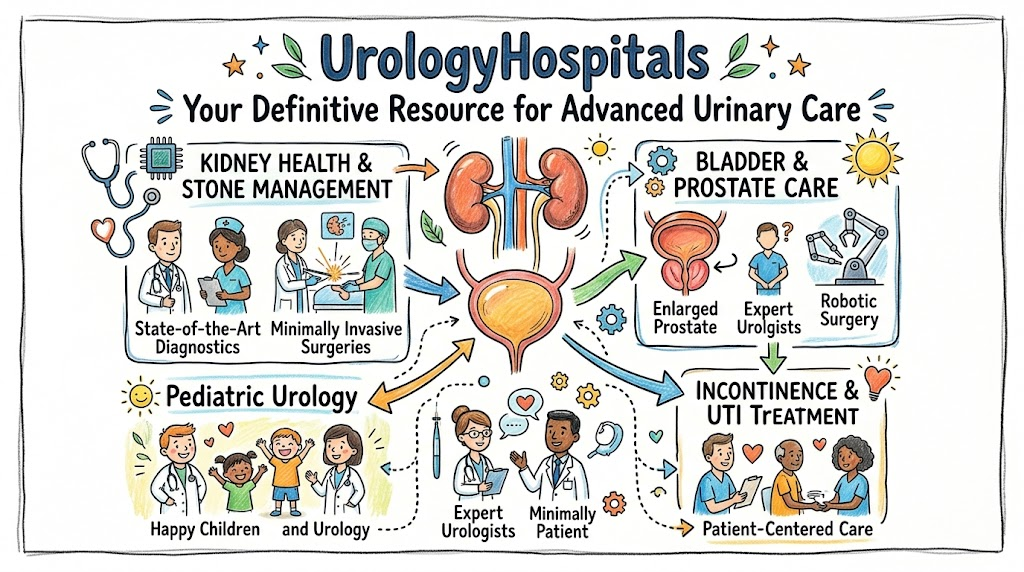
UrologyHospitals Your Definitive Resource for Advanced Urinary Care
Introduction
UrologyHospitals serves patients as a dedicated care-navigation hub. The platform simplifies complex urological conditions, therapeutic alternatives, and specialist discovery. Individuals often feel overwhelmed when unexpected urinary symptoms surface. Reliable digital resources empower patients to navigate clinical decisions with confidence.
Modern urology encompasses diverse diagnostic tests and innovative therapies. Clear educational content bridges the gap between medical jargon and patient comprehension. Readers gain valuable insights into pelvic health, renal care, and male reproductive wellness before attending initial clinical consultations.
Your Guide to Urology Hospitals and Specialized Urinary Care
Selecting an accredited medical center dictates your overall clinical trajectory. Premier Urology Hospitals deploy multidisciplinary teams, advanced imaging suites, and specialized nursing units. Patients should evaluate institutional accreditations, procedural volumes, and infection control metrics.
Leading facilities frequently spearhead clinical trials that introduce cutting-edge interventions. Comprehensive hospital research ensures families secure world-class care environments. Quality indicators ultimately guide patients smoothly from initial diagnosis toward specialized surgical interventions.
From Diagnosis to Recovery: Understanding Modern Urology Treatment
Contemporary Urology Treatment utilizes precise, minimally invasive techniques rather than traditional open operations. Advanced protocols minimize postoperative discomfort and shorten hospital stays significantly. Informed patients collaborate closely with surgical teams to select tailored therapeutic approaches.
Lifestyle modifications, pharmacotherapy, and targeted procedures form foundational pillars of modern management. Diagnostic imaging and laboratory pathology dictate personalized recovery roadmaps. Active communication with medical providers accelerates physiological restoration and elevates long-term quality of life.
Finding the Right Urology Specialist: Experience, Expertise, and Care
Qualified Urology Specialists provide critical oversight for intricate urinary and reproductive disorders. Board-certified experts complete rigorous fellowship training focusing exclusively on urogenital anatomy. Patients must evaluate professional credentials, sub-specialty focus, and interpersonal communication styles.
Transparent dialogue with your chosen clinician fosters a strong therapeutic partnership. Specialists coordinate seamlessly with primary physicians, radiologists, and oncologists. Expert oversight ensures every clinical recommendation aligns precisely with individual physiological needs and evidence-based medicine.
Kidney Stones Explained: Treatment Choices, Recovery, and Prevention
Mineral crystallization inside concentrated urine produces painful renal obstructions. Effective Kidney Stone Treatment involves advanced diagnostics, medications, and targeted lithotripsy procedures. Medical advancements allow urologists to fragment or extract stones safely.
Small formations often pass naturally with aggressive hydration and pain management. Obstructions requiring intervention utilize extracorporeal shock wave therapy or direct ureteroscopy. Post-treatment dietary adjustments and metabolic evaluations prevent future stone recurrence permanently.
Modern Urological Intervention Comparison
| Procedure Category | Mechanism and Technique | Primary Clinical Indication | Recovery Timeline | Core Advantages |
| Shock Wave Lithotripsy | External acoustic sound waves | Small kidney or upper ureter stones | Outpatient; immediate return | No surgical incisions required |
| Ureteroscopy | Endoscopic laser vaporization | Denser or lower ureteral stones | Short stay; rapid healing | Direct visualization and clearance |
| Robotic Prostate Surgery | Automated 3D arm articulation | Localized prostate malignancies | Moderate stay; structured rehab | Enhanced precision and blood conservation |
Prostate Cancer Care: Navigating Modern Treatment and Recovery
Early screening initiatives and personalized medicine revolutionize modern Prostate Cancer Care. Clinical strategies range from active surveillance to curative surgical resection and radiation therapy. Multidisciplinary tumor boards evaluate staging, patient age, and lifestyle priorities.
Thorough consultations empower individuals to weigh therapeutic risks against expected survival benefits. Preserving urinary continence and sexual function remains a primary objective during oncological planning. Comprehensive rehabilitation support helps patients adapt successfully following active treatment phases.
Living Better with BPH: Exploring Enlarged Prostate Treatment
Age-related prostate growth compresses the urethral canal, triggering obstructive urinary symptoms. Effective Enlarged Prostate Treatment restores comfortable voiding and prevents secondary bladder damage. Initial strategies deploy alpha-blockers or 5-alpha reductase inhibitors.
Minimally invasive options like prostatic urethral lifts or water vapor therapy offer rapid relief without daily medications. Choosing appropriate interventions allows men to reclaim normal daily routines and uninterrupted nighttime rest.
UTI Care Made Simple: Recognizing Symptoms and Understanding Treatment
Bacterial invasion within the urinary tract sparks uncomfortable infections requiring prompt evaluation. Targeted Urinary Tract Infection Treatment resolves acute discomfort and prevents ascending renal damage. Proper urine cultures identify specific microbial pathogens accurately.
Patients must complete full antibiotic courses even after initial symptom alleviation. Adequate hydration and proper hygiene habits minimize recurrence risks, safeguarding overall renal health effectively.
Bladder Cancer Journey: Diagnosis, Treatment, and Follow-Up Care
Painless hematuria often serves as the primary indicator prompting professional diagnostic cystoscopy. Comprehensive Bladder Cancer Treatment utilizes transurethral resection or radical cystectomy procedures. Long-term surveillance remains vital for monitoring recurrence.
Multidisciplinary care teams provide dietary counseling, psychological support, and stoma management education. Structured follow-up protocols ensure optimal rehabilitation and sustained life quality for survivors.
Inside Robotic Urology Surgery: Precision, Technology, and Patient Care
Robotic platforms grant surgeons high-definition magnification and tremor-filtered instrument articulation. Robotic Urology Surgery optimizes outcomes during complex radical prostatectomies and partial nephrectomies. Advanced technology ensures minimal blood loss and smaller incisions.
Surgeon expertise dictates operational success regardless of automated platform enhancements. Understanding technological capabilities reassures patients facing intricate surgical interventions.
Your Local Urology Guide: How to Find a Trusted Urologist Near You
Locating a dependable Urologist Near Me simplifies ongoing care coordination and follow-up visits. Regional provider directories help individuals evaluate local credentials, clinic services, and patient reviews. Proximity to care reduces travel strain significantly.
Establishing local medical connections guarantees timely access to routine screenings and emergency consultations. Transparent provider networks empower patients to secure accessible, high-quality healthcare.
Frequently Asked Questions About UrologyHospitals
Q1: What digital services does this platform deliver to visitors?
A1: It provides structured educational insights regarding urological conditions, therapeutic options, and verified specialist directories.
Q2: How can users locate qualified local medical practitioners?
A2: Visitors browse comprehensive regional databases filtering providers by clinical credentials, location, and sub-specialty expertise.
Q3: What interventions resolve symptomatic kidney stone obstructions?
A3: Options range from conservative hydration and medical expulsion therapy to lithotripsy and laser ureteroscopy.
Q4: How do physicians manage benign prostatic hyperplasia?
A4: Doctors utilize lifestyle changes, pharmaceutical agents, or minimally invasive procedures to relieve urinary symptoms.
Q5: Which signs suggest an active urinary tract infection?
A5: Frequent urgency, painful urination, and lower abdominal discomfort indicate potential microbial infections.
Q6: What benefits define robotic surgical interventions?
A6: They deliver enhanced visualization, precise articulation, minimized blood loss, and accelerated postoperative recovery.
Q7: Which assessments evaluate suspected prostate malignancies?
A7: Protocols combine prostate-specific antigen blood tests, physical examinations, and targeted diagnostic imaging studies.
Q8: How does the platform maintain educational integrity?
A8: Content integrates evidence-based medical guidelines and structured care-navigation principles to ensure accuracy.
Q9: What should patients anticipate during introductory clinical consultations?
A9: Clinicians review medical histories, evaluate reported symptoms, and design personalized diagnostic roadmaps.
Q10: Does this platform execute direct appointment scheduling?
A10: It functions as an informational care-navigation resource connecting users with extensive provider profiles.
Final Thoughts
Proactive health management depends entirely upon accessible medical education and verified provider networks. Evaluating modern treatment modalities ensures individuals make confident healthcare choices. Explore platform resources, consult experienced professionals, and prioritize your wellness today.
Leave a Reply