Global Mobile Network Directory: How to Find MCC, MNC, and Telecom Operators Worldwide
Introduction
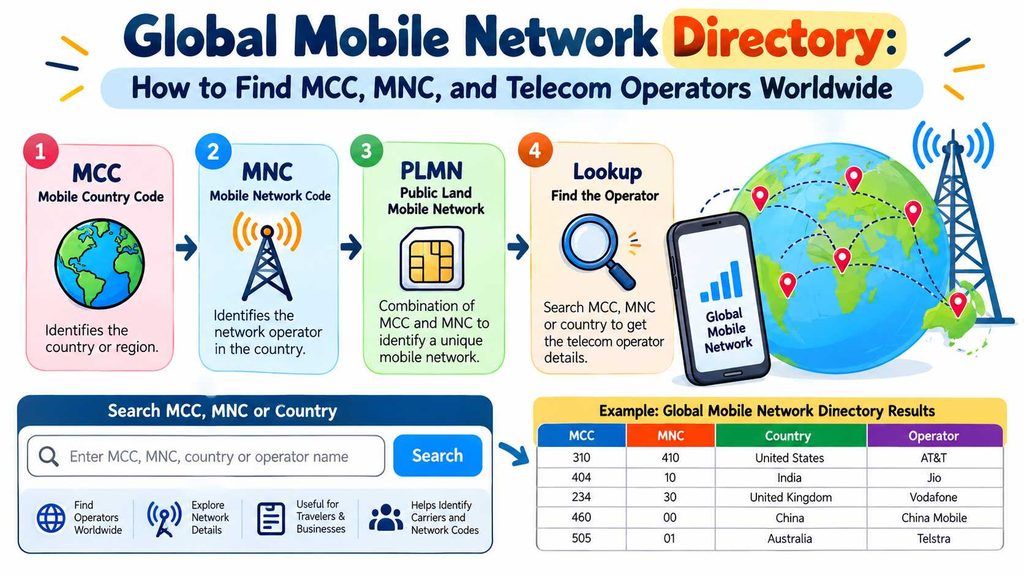
Mobile phones connect people across countries through complex telecom networks. Each network uses specific identifiers to help devices and systems recognize mobile operators. Three important identifiers are the Mobile Country Code (MCC), Mobile Network Code (MNC), and Public Land Mobile Network (PLMN) identifier.
These codes support many telecom tasks. Network engineers use them to identify mobile networks. Developers use them when building telecom applications. eSIM providers rely on network information when researching mobile connectivity options. Travelers may also need operator details when comparing mobile services in another country.
However, finding accurate network information can take time. Information often sits across different databases, operator websites, and technical documents. Users need a clear way to explore these details without searching many separate sources.
eSIMGlobo aims to make this research easier through a global telecom provider directory. The platform helps users explore mobile network operators, network identifiers, country-based telecom information, MVNOs, and eSIM providers.
Visit eSIMGlobo to explore its telecom directory and learn more about global mobile network information.
1. What Makes Mobile Network Identifiers Important?
Mobile network identifiers help telecom systems distinguish one network from another. They provide structured information about a country and its mobile operator.
Without these identifiers, telecom databases would have a harder time organizing network information. Applications and network tools also need consistent identifiers when they process mobile network data.
Three terms appear frequently in this area:
- MCC: Identifies the country or geographical area associated with a mobile network.
- MNC: Identifies a mobile network operator within the relevant numbering system.
- PLMN: Refers to a public land mobile network, commonly identified through a combination of MCC and MNC.
These identifiers work together, but each serves a different purpose. Understanding the differences helps users search telecom databases more effectively.
2. MCC, MNC, and PLMN: Understanding the Differences
Telecom professionals often use MCC, MNC, and PLMN when they investigate mobile networks. Beginners may find these terms confusing at first. A simple comparison makes them easier to understand.
| Identifier | Full Form | Main Purpose | Typical Use |
|---|---|---|---|
| MCC | Mobile Country Code | Identifies a country or geographical area | Country-based network identification |
| MNC | Mobile Network Code | Identifies a mobile network operator within a numbering plan | Operator identification |
| PLMN | Public Land Mobile Network | Identifies a public mobile network, commonly through MCC and MNC | Network identification and telecom configuration |
An MCC helps identify the relevant country or area. An MNC distinguishes a mobile network operator within that numbering framework. Together, they form the core of a PLMN identity.
Users should also understand that code length and assignment rules can vary by numbering plan and country. Always check the relevant records before using a code in a production system.
3. Where Can You Look Up MCC and MNC Codes?
Several sources can help users research mobile network identifiers. The best option depends on the level of detail, verification, and technical support they need.
Official Telecom Records
The International Telecommunication Union maintains international telecommunications standards and related records. Its E.212 recommendation defines the international identification plan for public networks and subscriptions.
Official records provide an important reference when users need to verify code assignments. However, users may still need additional research to understand an operator’s services, brands, or commercial presence.
National Telecom Regulators
National telecommunications authorities may publish information about licensed operators and assigned network resources. These records can help users investigate operators within a particular country.
The available information and level of detail vary by regulator. Some authorities provide searchable databases, while others publish documents or regulatory notices.
Mobile Operator Websites
Mobile network operators may publish details about their networks, services, coverage, and roaming arrangements. These websites help users confirm commercial information directly with the provider.
However, operator websites do not always offer a complete directory of MCC and MNC assignments.
Global Telecom Directories
A global telecom directory can make research easier by organizing information around countries, operators, and network identifiers.
eSIMGlobo focuses on this type of discovery. It helps users explore global telecom providers and related network information through a centralized directory.
Start your research at eSIMGlobo.
4. How to Find a Mobile Network Operator by Country
A country-based search provides a practical starting point when you need to identify a mobile operator.
Follow these steps to organize your research.
Step 1: Choose the country
Start with the country where the mobile network operates. This narrows your search and helps you avoid confusing operators with similar names.
Step 2: Search for the operator
Enter the provider’s name into a telecom directory or an appropriate official database. If you do not know the operator’s name, begin with the country’s mobile network directory.
Step 3: Check the MCC
Review the Mobile Country Code associated with the relevant network. Confirm that the country or geographical area matches your research.
Step 4: Verify the MNC
Check the Mobile Network Code assigned to the operator. Do not assume that every brand uses a separate code or that one company has only one network identifier.
Step 5: Review the PLMN identity
Where the source provides this information, confirm the PLMN identifier associated with the network. Check the code format before using it in technical work.
Step 6: Verify the information
Compare important details with authoritative records, especially when the result will support a technical configuration, business decision, or telecom integration.
This process helps users move from a broad country search to a more specific network identification.
5. What Information Should a Global Telecom Directory Include?
A useful telecom directory should help users move beyond a list of operator names. It should make related information easier to discover and compare.
The following features can improve the research experience.
| Directory Feature | What It Helps Users Do |
|---|---|
| Country directory | Explore mobile network providers by country |
| MCC and MNC information | Research mobile network identifiers |
| PLMN lookup | Understand network identification details |
| Operator profiles | Review available information about individual providers |
| MVNO directory | Discover mobile virtual network operators |
| eSIM provider directory | Research companies that offer eSIM-related services |
| Search and filtering | Narrow results by country, provider, or category |
| Telecom database access | Organize network information for research and analysis |
| API information | Explore potential options for accessing data programmatically, where available |
Not every directory offers every feature. Users should check the platform’s current capabilities before relying on a particular function.
eSIMGlobo focuses on global telecom provider discovery, network identifiers, operator directories, and related telecom research. Users can explore its current offerings through the eSIMGlobo website.
6. Mobile Network Operators and MVNOs: What Is the Difference?
Mobile network operators and mobile virtual network operators play different roles in the telecom industry.
A Mobile Network Operator (MNO) operates a mobile network using its own licensed spectrum and network infrastructure, subject to the relevant regulatory framework.
A Mobile Virtual Network Operator (MVNO) offers mobile services through arrangements with one or more network operators. An MVNO may focus on specific customer groups, pricing models, or service features.
Consider these differences:
| Factor | MNO | MVNO |
|---|---|---|
| Network infrastructure | Operates mobile network infrastructure | Typically relies on another operator’s network |
| Spectrum | Uses licensed spectrum under applicable authorization | Generally does not operate its own licensed radio spectrum for its mobile service |
| Customer services | Provides mobile services directly | Provides mobile services through wholesale network arrangements |
| Business model | Invests in and operates network infrastructure | Focuses on service delivery, pricing, branding, or specific markets |
| Identifier research | Check official network assignments | Verify the network relationship and any relevant identifiers |
The exact business and technical arrangements vary by provider and country.
An MVNO’s brand name does not automatically reveal which underlying network it uses. Researchers should verify these relationships rather than infer them from branding alone.
A telecom directory that includes both MNOs and MVNOs can help users understand the wider mobile service market.
7. Why Accurate Network Information Matters for eSIM Research
An eSIM lets a compatible device store and use a digital SIM profile instead of relying only on a removable physical SIM card. Users can activate supported mobile plans without inserting a traditional SIM card.
However, eSIM compatibility involves more than finding a provider’s name. Users may need to consider device support, plan terms, supported countries, network access, and activation requirements.
Network identifiers can support technical research, but they do not answer every question about eSIM availability.
For example, a researcher may want to determine:
- Which mobile operators serve a particular country.
- Which network identifiers relate to a specific operator.
- Which providers offer eSIM services.
- Whether a plan supports the destination country.
- Whether a device supports the required network technologies.
- Whether the provider lists roaming or local network access details.
A directory can help users discover relevant providers and organize their research. They should still verify plan details with the provider before making a purchase.
eSIMGlobo brings together telecom directory information to help users explore operators, network identifiers, and eSIM-related providers. Visit eSIMGlobo to learn more about its directory.
8. Common Reasons People Search for MCC and MNC Codes
Different users need network identifiers for different reasons. The following examples show how these codes support telecom research and technical work.
Telecom Engineers
Engineers may check MCC and MNC values while reviewing network configurations, device behavior, or mobile network information. Accurate records help them investigate the correct network.
They should verify code assignments against suitable technical documentation before changing production configurations.
Software Developers
Developers may need network identifiers when building applications that process mobile network data. Examples include network lookup tools, telecom analytics systems, and provider directories.
They should confirm the required data format and licensing conditions before integrating external datasets.
IoT and Connectivity Teams
Internet of Things (IoT) teams may research mobile connectivity options for connected devices. Network availability, roaming arrangements, device compatibility, and commercial agreements can all affect deployment decisions.
MCC and MNC data can help identify networks, but teams need more information to confirm service availability.
Telecom Researchers
Researchers may compare operators across countries, examine market structures, or organize mobile network data.
A consistent directory can reduce manual work and help researchers structure their findings.
Travelers and eSIM Users
Travelers may search for mobile providers before visiting another country. They may want to understand local network options or compare international connectivity services.
An operator directory can support the early research stage. Travelers should confirm coverage, prices, data allowances, and activation rules with the service provider.
9. How to Check Telecom Data Before Using It
Not every online listing contains complete or current information. A careful verification process helps users avoid mistakes.
Use the following checklist when researching a mobile operator.
Confirm the operator’s identity. Check the provider’s official name and any relevant brand names. Similar names can refer to different businesses.
Check the country or area. Make sure the listing refers to the correct market. A provider may operate under different arrangements across several countries.
Review the code assignment. Confirm MCC and MNC values against an authoritative source where possible. Do not rely on an unverified directory entry for critical technical work.
Check the data date. If the source provides an update date, review it. Telecom records and commercial arrangements can change.
Separate network ownership from service branding. A brand may sell mobile services without operating its own radio network.
Look for missing information. A directory may not publish every identifier, relationship, or technical field. Treat missing information as unknown rather than guessing.
Verify important decisions independently. Use official records, operator documentation, or relevant regulatory sources when accuracy matters.
These checks help users build a more reliable view of global telecom providers.
10. What Is an MCC/MNC Lookup API?
An application programming interface (API) allows one software system to request information from another system through a defined interface.
An MCC/MNC lookup API can help applications retrieve information associated with mobile network identifiers. Depending on the service, that information may include country details, operator names, or related network records.
Potential uses include:
- Adding network lookup features to a telecom application.
- Supporting internal telecom research tools.
- Organizing operator information within a database.
- Helping teams process network identifiers in a consistent format.
- Reducing repeated manual searches across different sources.
Before choosing an API, users should review several factors.
| Evaluation Factor | Questions to Ask |
|---|---|
| Data coverage | Which countries and operators does the service cover? |
| Data quality | How does the provider verify and update its records? |
| API documentation | Does the documentation explain requests, responses, and errors? |
| Access limits | Does the service impose request limits or usage restrictions? |
| Pricing | Does the provider publish its fees and usage tiers? |
| Licensing | What uses does the provider permit? |
| Support | Does the provider explain how users can report errors or request help? |
The availability of a specific API, its pricing, and its technical features depend on the provider.
eSIMGlobo identifies an MCC/MNC Lookup API as part of its broader telecom focus. Users should consult the platform directly for current availability, documentation, pricing, and access terms.
11. Mistakes to Avoid During Network Code Research
A small research mistake can lead to incorrect records or wasted development time. Keep these common issues in mind.
Confusing MCC with MNC
MCC identifies the relevant country or geographical area. MNC identifies a mobile network operator within the applicable numbering plan. They serve different purposes.
Assuming Every Operator Has One Identifier
An operator’s network arrangements can be more complex than a single code pair. Verify the relevant assignment instead of assuming that one company always maps to one identifier.
Treating an MVNO as a Network Owner
An MVNO may use another operator’s network. Its brand name alone does not establish ownership of network infrastructure or identify every network it uses.
Relying on Outdated Information
Old records may not reflect the current status of a provider or network assignment. Check update dates and authoritative records whenever possible.
Confusing Network Identity with Coverage
An MCC/MNC record helps identify a network. It does not prove that a particular service works in every location or on every device.
Assuming an eSIM Directory Guarantees Compatibility
A provider listing does not guarantee that a specific plan supports a particular phone, country, or network. Confirm the details before purchasing or activating a plan.
Using Data Without Checking Its Terms
Some datasets impose limits on copying, redistribution, or commercial use. Review the source’s licensing terms before integrating data into an application.
Avoiding these mistakes makes telecom research more consistent and useful.
12. How eSIMGlobo Supports Global Telecom Discovery
Finding mobile network information across many countries can require repeated searches. Users may need to check operator names, identifiers, service brands, and eSIM providers separately.
eSIMGlobo aims to simplify this process through an independent global telecom provider directory. Its focus includes mobile network operators, MCC/MNC lookup, PLMN information, mobile network codes by country, telecom provider research, MVNO discovery, and eSIM provider discovery.
The platform can be useful for several types of users.
Telecom professionals can explore operator and network information during research.
Developers can investigate network identifiers while planning applications and data workflows.
Researchers can use country and provider information to organize telecom market studies.
eSIM businesses can explore the wider provider landscape and related network information.
Travelers can research mobile service providers before comparing connectivity options for a destination.
Users should confirm the current scope of each feature directly on the platform. They should also verify critical technical information with official records before relying on it.
Explore the directory at eSIMGlobo.
13. Practical Tips for Building a Reliable Telecom Directory
A telecom directory becomes more useful when it organizes data clearly and handles uncertainty honestly.
If you manage or build a directory, consider these practices.
Use consistent fields. Store country, operator name, MCC, MNC, and PLMN information in clearly defined fields. Consistent formats make searching and comparison easier.
Record the source. Keep track of where each record came from. Source information helps reviewers verify assignments and investigate discrepancies.
Track updates. Add an update date when the system supports it. This helps users understand how recently someone reviewed the information.
Separate confirmed and unconfirmed details. Do not present an assumption as a verified assignment. Mark missing details clearly.
Support country-based discovery. Let users search by country, operator name, or available network identifiers.
Handle duplicates carefully. One company may operate several brands, and multiple providers may share similar names. Use suitable identifiers and relationships to distinguish them.
Review API requirements. If you provide programmatic access, document supported fields, request limits, errors, and licensing conditions.
Respect data rights. Check the source’s terms before copying, publishing, or redistributing telecom records.
These practices help maintain a directory that users can understand and verify.
14. The Future of Telecom Directories and Network Lookup
Telecom services continue to evolve as providers expand digital offerings and businesses connect more devices. eSIM adoption, international connectivity, IoT deployments, and software-based telecom tools all create demand for structured provider information.
Several areas may shape future directory needs.
Better Data Access
Developers often need structured information instead of manually reviewing long documents. Searchable databases and well-documented APIs can help teams work more efficiently.
More Detailed Provider Discovery
Users may want to compare network operators, MVNOs, and eSIM providers within one research workflow. Clear categories can make those relationships easier to understand.
Stronger Data Verification
Accurate network information remains important for technical systems. Clear sourcing, update records, and transparent handling of missing data can improve confidence.
More Useful Search Tools
Country filters, operator searches, and identifier-based lookup can help users find relevant records faster.
Greater Focus on International Connectivity
Travelers and businesses often need to understand mobile services across borders. Directories can support this research by bringing provider information into a more organized format.
These developments create opportunities for telecom directories to make network research easier. However, users will still need authoritative records and provider confirmation for critical decisions.
Frequently Asked Questions
1. What does MCC mean in mobile networks?
MCC stands for Mobile Country Code. It identifies the country or geographical area associated with a mobile network under the relevant numbering plan.
2. What does MNC stand for?
MNC means Mobile Network Code. It helps identify a mobile network operator within the applicable country or numbering framework.
3. What is a PLMN code?
PLMN stands for Public Land Mobile Network. A PLMN identity commonly combines an MCC and an MNC to identify a public mobile network.
4. Where can I find MCC and MNC codes?
You can research these codes through official telecom records, national regulators, operator documentation, and global telecom directories. Always verify important assignments against authoritative sources.
5. What is eSIMGlobo?
eSIMGlobo is an independent global telecom provider directory. It focuses on mobile network operators, network identifiers, telecom provider discovery, MVNOs, and eSIM-related information.
6. Can I search for mobile operators by country?
A country-based telecom directory can help you discover operators associated with a particular market. The available search features depend on the directory you use.
7. Are MCC and MNC codes the same worldwide?
MCC and MNC serve different purposes within international mobile network identification. MCC identifies a country or area, while MNC identifies a network within the relevant numbering plan. Assignment details depend on the applicable records.
8. Does an MCC/MNC lookup confirm mobile coverage?
No. A lookup helps identify a mobile network. Coverage depends on other factors, including the operator’s service area, roaming arrangements, device compatibility, and network technology.
9. What is the purpose of an MCC/MNC lookup API?
An API can let software retrieve network information through a defined interface. Depending on the service, developers may use it to support operator lookup, telecom research, or network-data applications.
10. How can I verify telecom network information?
Compare directory results with official telecom records, regulator information, and operator documentation. Check source dates and confirm important assignments before using them in technical systems.
11. Do MVNOs have their own mobile networks?
MVNOs generally provide mobile services through agreements with network operators. Their exact arrangements vary, so users should verify the underlying network relationship.
12. Why should I check the source of an MCC/MNC record?
A reliable source helps you confirm the assignment and understand its context. Source checks also reduce the risk of using outdated or incorrect data.
Final Thoughts
Reliable mobile network information helps people understand the global telecom landscape. MCC and MNC codes identify networks, while PLMN information brings these identifiers together for network identification.
The challenge lies in finding the right details and confirming their accuracy. Official records, regulator publications, operator documentation, and structured directories each play a useful role.
For users researching mobile network operators, country-based code assignments, MVNOs, or eSIM providers, eSIMGlobo offers a starting point for global telecom discovery. Explore its directory at https://esimglobo.com/ and verify important technical details with authoritative sources before making decisions.
Leave a Reply