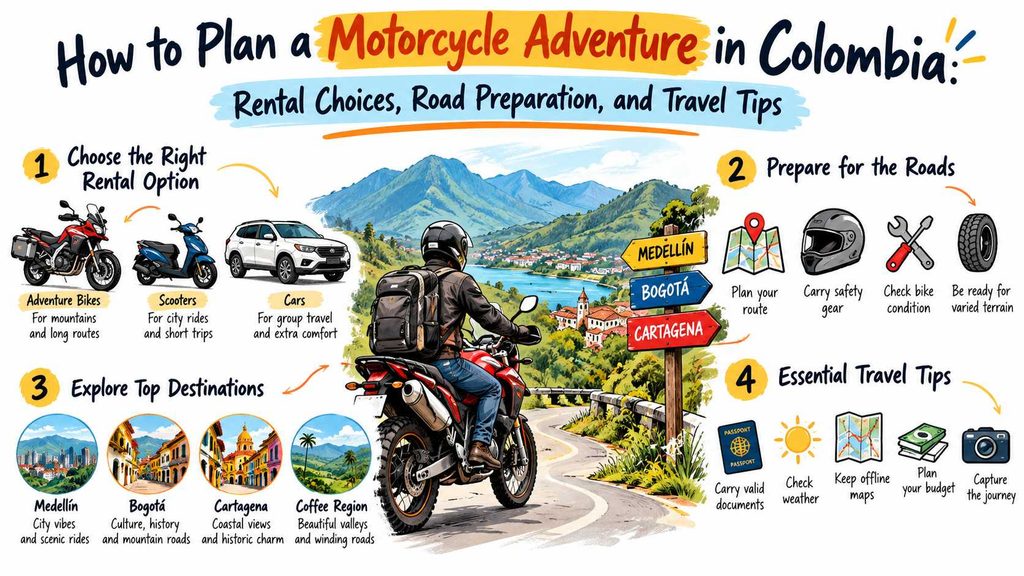
How to Plan a Motorcycle Adventure in Colombia: Rental Choices, Road Preparation, and Travel Tips
Introduction
Traveling through Colombia by motorcycle gives visitors a different way to experience the country’s cities, mountain landscapes, coastal communities, and rural roads. Instead of following a fixed transportation schedule, riders can build an itinerary around their interests, stop at suitable viewpoints, and adjust their plans as they travel. However, a successful journey starts with careful preparation, not simply choosing an attractive motorcycle.
If you plan to explore Colombia on two wheels, begin by reviewing motorcycle rental options in Colombia. Check the available vehicles, rental requirements, included equipment, insurance conditions, and pickup arrangements before committing to a booking.
Your choice should reflect your riding experience, travel distance, luggage, budget, and intended routes. A compact motorcycle may work well for short journeys, while a more powerful model may suit an experienced rider planning longer distances. Travelers who prefer greater weather protection or need extra passenger and luggage space may find a car more practical.
This guide explains how to organize a rental, prepare for Colombian road conditions, compare transportation options, and make informed decisions throughout your trip.
1. Start with a Realistic Travel Plan
Before choosing a motorcycle, decide what you want to accomplish during your trip. Some travelers want to explore one city, while others want to visit several regions over multiple days. These different goals require different vehicles, budgets, and preparation.
Create a simple itinerary that includes:
- Your arrival city and departure city.
- The locations you want to visit.
- Your expected daily riding distance.
- Planned overnight stops.
- The amount and type of luggage you will carry.
- Alternative transportation options if weather or road conditions change.
Avoid filling every day with long journeys. Mountain roads, urban congestion, rain, construction, and unexpected stops can extend travel times. Leave enough room to rest, eat, refuel, and reach your accommodation before riding becomes tiring.
For a first visit, consider using one city as your base rather than attempting to cross several regions immediately. This approach lets you become familiar with local traffic and the motorcycle before committing to a longer journey.
2. Select a Motorcycle That Fits Your Riding Ability
The right motorcycle should feel manageable under the conditions you expect to encounter. Engine size alone cannot determine whether a vehicle suits your trip.
Standard motorcycles for everyday travel
Standard motorcycles can suit city travel, sightseeing, and selected regional journeys. Their practicality depends on the model, road conditions, and rider experience.
Before renting one, check the seat height, weight, handlebar position, braking response, and clutch feel. Make sure you can control the motorcycle comfortably when stopping, turning, and maneuvering at low speeds.
Scooters for selected urban journeys
A scooter can offer a convenient option for shorter journeys when the vehicle and route suit its capabilities. Some scooters use automatic transmission, which can simplify operation for riders who already have the appropriate experience and legal authorization.
However, a scooter may not suit every highway, steep climb, or rough road. Review its engine capacity, luggage space, tire condition, and permitted use before planning longer trips.
Adventure motorcycles for varied routes
An adventure motorcycle may suit experienced riders who expect to cover longer distances or encounter a mixture of road surfaces. These motorcycles often offer an upright riding position and features designed for touring.
Nevertheless, some models have considerable weight and seat height. If you cannot confidently manage the motorcycle while stationary or at low speeds, choose a more manageable option.
Touring motorcycles for extended rides
Touring-oriented motorcycles may provide greater comfort for long riding days, depending on their design. Consider wind protection, seating comfort, luggage arrangements, fuel range, and maintenance support.
Before selecting any motorcycle, ask the rental provider whether the vehicle suits your planned route. Never assume that a particular model can handle every road in Colombia.
3. Compare Rental Options in Medellín, Bogotá, and Cartagena
Colombia’s major destinations offer different travel environments. Your starting point should influence how you prepare and which vehicle you choose.
Motorcycle rental in Medellín
Medellín offers access to urban attractions and surrounding mountainous areas. Riders should prepare for elevation changes, winding roads, traffic, and weather variations.
When comparing motorcycle rental Medellin options, pay attention to handling, braking performance, tire condition, and your own experience riding on hills. Practice stopping and starting on safe inclines before attempting unfamiliar mountain routes.
Plan your departure times carefully, and avoid rushing through unfamiliar roads simply to meet a schedule.
Motorcycle rental in Bogotá
Bogotá sits at a high elevation and experiences busy urban traffic. Riders should consider the effects of elevation on their comfort, local traffic patterns, and weather conditions.
When evaluating motorcycle rental Bogota options, prioritize a vehicle you can handle confidently in slow-moving traffic. Check the expected route before leaving the city, particularly if you plan to travel beyond the urban area.
Allow extra time for congestion and avoid navigating unfamiliar streets while distracted by a phone or navigation device.
Motorcycle rental in Cartagena
Cartagena offers access to historic neighborhoods and coastal surroundings. The city’s heat, humidity, traffic, and occasional rain can affect riding comfort.
If you are considering motorcycle rental Cartagena services, check whether your accommodation provides secure parking and whether your intended destinations justify using a motorcycle. For short urban visits, walking or other local transportation may sometimes prove more convenient.
Do not assume that a motorcycle provides unrestricted access to every historic street, pedestrian area, or restricted zone. Follow local signs and traffic rules.
4. Calculate the Complete Rental Budget
The advertised daily rate tells only part of the story. A realistic budget should include the costs associated with collecting, operating, and returning the motorcycle.
| Expense | What to check |
|---|---|
| Rental charge | Daily rate, minimum rental period, and total booking cost |
| Security deposit | Amount, payment method, and return conditions |
| Insurance | Coverage limits, exclusions, and excess or deductible |
| Fuel | Expected consumption and fuel availability along the route |
| Protective equipment | Whether a suitable helmet and other equipment are included |
| Additional mileage | Any distance restrictions or excess-mileage charges |
| Late return | Fees and procedures for changing the return time |
| Damage liability | Responsibility for scratches, accidents, theft, and missing equipment |
| Optional equipment | Luggage storage, phone mounts, or other available accessories |
| Contingency funds | Money for unexpected transport, accommodation, or repairs |
Ask for the full rental terms in writing. Clarify whether the provider calculates charges by calendar day, a fixed number of hours, or another arrangement.
Fuel costs depend on the motorcycle, route, riding style, and current prices. Mountainous terrain, heavy traffic, and frequent stops can change consumption, so avoid relying on a single estimate for your entire journey.
A lower rental rate does not necessarily represent better value. Compare the total cost, vehicle condition, support arrangements, and contractual responsibilities.
5. Check Your Licence and Rental Eligibility
International travelers should confirm their legal eligibility before collecting a motorcycle. Requirements can depend on nationality, licence type, vehicle category, immigration status, and current Colombian regulations.
Before booking, take these steps:
- Check the current Colombian driving requirements for foreign visitors.
- Confirm that your licence authorizes you to ride the relevant motorcycle category.
- Ask whether you need an International Driving Permit alongside your domestic licence.
- Verify whether the rental provider imposes additional age or experience requirements.
- Carry the required original documents when riding.
- Confirm that the rental agreement identifies you as an authorized rider.
Do not assume that a standard car licence automatically permits motorcycle riding. An International Driving Permit also does not independently grant driving privileges; it supports your underlying licence where applicable.
Confirm the requirements with the relevant Colombian authorities or your embassy before departure. If your documentation does not clearly authorize the intended vehicle category, resolve the issue before making a non-refundable booking.
6. Inspect the Motorcycle Before Leaving
A brief inspection can help you identify problems before they become your responsibility or create a safety risk.
Use a checklist when collecting the motorcycle.
Exterior and tires
- Look for cracks, dents, loose bodywork, and visible damage.
- Inspect the tires for obvious wear, cuts, and insufficient inflation.
- Check the wheels for visible damage.
Brakes and controls
- Test the front and rear brakes while stationary.
- Check the throttle, clutch, and gear controls.
- Make sure the handlebars move freely and the mirrors provide a useful view.
Lights and instruments
- Test the headlights, brake light, indicators, and horn.
- Check the fuel gauge and dashboard warning lights.
- Ask about any warning light or unusual noise.
Documents and equipment
- Verify the rental paperwork and required vehicle documents.
- Check the helmet’s condition and fit.
- Confirm that any included locks, keys, or luggage accessories work properly.
Photograph or record existing damage before departure. Make sure the provider acknowledges any significant damage in the handover record.
Ask the provider how to contact support if the motorcycle develops a mechanical problem. Do not ride away if the brakes, tires, lights, steering, or another essential component appears unsafe.
7. Understand Insurance and Damage Responsibilities
Insurance deserves careful attention because policies can differ substantially between rental providers.
Before signing, ask what the policy covers and what it excludes. Do not rely on broad statements such as “insurance included” without reviewing the details.
Clarify the following points:
- Does the policy cover third-party liability?
- Does it cover damage to the rented motorcycle?
- Does it include theft protection?
- What excess or deductible would you need to pay?
- Does coverage apply to every authorized rider?
- Are there restrictions on road types, locations, or vehicle use?
- What steps must you follow after an accident?
- Does the agreement require immediate notification of damage?
A policy may include coverage while excluding particular events or circumstances. Your personal travel insurance or credit card benefits may also exclude motorcycles or require specific engine-capacity limits.
Keep copies of the rental agreement and insurance details. Save the emergency contact information before starting your journey.
If an accident occurs, prioritize safety, contact the appropriate emergency services when necessary, and follow the reporting instructions in your agreement and insurance policy.
8. Prepare for Colombia’s Road Conditions
Colombia’s geography creates a varied riding environment. Urban streets, steep mountain roads, rural routes, and coastal roads can require different riding techniques and preparation.
Mountain roads
Mountain routes may include sharp bends, steep gradients, changing visibility, and limited passing opportunities. Maintain a controlled speed, leave adequate braking distance, and avoid overtaking when visibility is restricted.
Use a gear that helps you maintain control on climbs and descents. If you have little experience riding in mountainous conditions, begin with a short, manageable route rather than a demanding journey.
City traffic
Busy urban areas require consistent attention to vehicles, motorcycles, buses, pedestrians, and road markings. Avoid sudden lane changes and maintain enough space to respond to unexpected movements.
Follow traffic signals and local restrictions. Do not assume that other road users will always follow the rules.
Rain and slippery surfaces
Rain can reduce traction and visibility. Painted road markings, metal covers, loose gravel, and oily surfaces can become especially slippery when wet.
Reduce your speed gradually, increase following distance, and use smooth braking and steering inputs. If conditions become unsafe, find a legal and secure place to stop.
Rural roads
Some rural routes may have uneven surfaces, limited lighting, or fewer services. Check the route before departure and avoid assuming that every road shown on a digital map offers suitable conditions for your motorcycle.
If a route requires riding on unpaved roads, confirm that the rental agreement permits it and that the motorcycle suits the terrain.
9. Pack for Comfort and Practicality
Your luggage affects balance, comfort, and the ease of handling a motorcycle. Pack only what you can secure properly.
Useful items include:
- A properly fitting, legally compliant helmet.
- Riding gloves and protective clothing.
- Suitable footwear that covers the feet and ankles.
- Rain protection appropriate for riding.
- A compact first-aid kit.
- A phone charger or power bank.
- Offline navigation information.
- Drinking water and basic personal supplies.
- Copies of essential travel and rental documents.
Secure all luggage so it cannot shift, interfere with the controls, or contact hot or moving parts. Keep valuables out of sight when parking, and avoid leaving important documents in an unattended motorcycle.
Choose protective gear based on safety rather than appearance. Comfortable clothing alone does not provide adequate protection in a fall.
10. Plan Fuel Stops and Daily Riding Limits
Fuel availability varies by route, and unfamiliar roads can make distance estimates unreliable. Before leaving a city, identify suitable fuel stops and confirm that they align with your motorcycle’s range.
Refuel before entering a remote section if you are uncertain about the next station. Keep enough money available for fuel and other necessary expenses, and do not assume that every station will accept every payment method.
Plan each riding day around realistic distances rather than the maximum distance you think you can cover. Allow time for meals, sightseeing, traffic, and rest.
Fatigue can reduce concentration and reaction time. Stop when you feel tired, uncomfortable, or distracted. Never continue riding simply because your itinerary requires you to reach a destination by a certain hour.
If the weather deteriorates or a route becomes unsafe, change your plans. A flexible schedule often makes a trip more enjoyable and reduces the temptation to take unnecessary risks.
11. Decide When a Car Makes More Sense
Motorcycles offer flexibility, but they do not suit every traveler or destination.
A car may be a better option when you need to carry multiple suitcases, travel with several passengers, transport children, or protect yourself from extended periods of rain. A car can also make sense when the route demands equipment or comfort that a motorcycle cannot provide.
Travelers comparing car rental Medellin services should consider parking, traffic, road access, insurance, fuel, and the total number of passengers. A car does not automatically eliminate road risks, and unfamiliar driving conditions still require preparation.
For a mixed itinerary, consider combining transportation methods. You could use public transport or a car for longer transfers and rent a motorcycle for shorter journeys where it offers a practical advantage.
The most suitable transportation choice is the one that fits the entire journey, not necessarily the one that offers the greatest freedom in theory.
12. Avoid These Common Motorcycle Rental Mistakes
Small oversights can create unnecessary costs, delays, or safety problems. Avoid these common errors before and during your trip.
Booking without checking the rental agreement: Read the mileage limits, deposit terms, insurance conditions, and return rules before paying.
Choosing a motorcycle beyond your skill level: Select a vehicle you can control comfortably in traffic, at low speeds, and on the expected terrain.
Ignoring existing damage: Document scratches, dents, and other issues during collection. Request written acknowledgment where appropriate.
Assuming every road suits your vehicle: Check route conditions and rental restrictions before entering rural or unpaved areas.
Underestimating weather: Review local forecasts and allow flexibility when rain, poor visibility, or other conditions may affect the journey.
Carrying unsecured luggage: Fasten bags properly and confirm that the load does not interfere with balance or controls.
Riding without confirming legal eligibility: Verify licence category, required documents, and insurance conditions before departure.
Planning excessively long days: Set realistic travel limits and include rest breaks.
Ignoring return procedures: Confirm the return location, agreed time, fuel expectations, inspection process, and deposit-release conditions.
Relying entirely on mobile navigation: Prepare offline directions and keep a backup plan in case your phone loses power or connectivity.
13. Make Responsible Choices Throughout Your Trip
A responsible motorcycle trip protects both the rider and the communities along the route.
Respect speed limits, road signs, pedestrian areas, and local restrictions. Never ride under the influence of alcohol or drugs, and avoid using a phone while moving. If you need to check directions, stop somewhere safe and legal first.
Treat local residents, other drivers, and fellow riders with consideration. Avoid unnecessary noise in residential areas, and never leave litter at scenic stops or natural attractions.
Check the motorcycle regularly during a multi-day journey. Pay attention to changes in tire condition, braking, unusual sounds, or dashboard warnings. Contact the rental provider if you notice a problem rather than attempting an unfamiliar repair.
Protect your personal belongings when stopping. Choose secure parking where available, avoid displaying valuables, and keep your keys and documents under your control.
Finally, recognize your limits. You can change a route, postpone a ride, or choose another transportation method when conditions do not support safe travel.
14. Important Considerations Before Booking
Use the following checklist to review the essentials before confirming a motorcycle rental in Colombia.
| Planning area | Questions to answer |
|---|---|
| Vehicle selection | Does the motorcycle suit my experience and route? |
| Legal requirements | Can I legally ride this vehicle in Colombia? |
| Rental cost | Do I understand the total price and possible extra charges? |
| Security deposit | When and under what conditions will the provider return it? |
| Insurance | What does the policy cover, and what exclusions apply? |
| Vehicle condition | Can I inspect the motorcycle and document existing damage? |
| Protective equipment | Can I obtain a suitable helmet and other necessary gear? |
| Route planning | Have I checked road conditions, fuel stops, and weather? |
| Emergency support | Do I know whom to contact if the motorcycle breaks down? |
| Return arrangements | Do I understand the location, time, and inspection procedure? |
Do not finalize a booking until you understand the important terms. If a provider cannot clearly explain a critical condition, request clarification before paying.
Frequently Asked Questions
1. Is renting a motorcycle in Colombia a good idea for tourists?
It can suit tourists who have the appropriate licence, relevant riding experience, and a realistic itinerary. Consider traffic, weather, road conditions, and insurance before deciding whether a motorcycle fits your trip.
2. What should I check before booking a motorcycle rental in Colombia?
Review the vehicle specifications, rental price, deposit, insurance, licence requirements, mileage restrictions, included equipment, cancellation terms, and return procedure.
3. Can I rent a motorcycle in Medellín?
You can look for motorcycle rental Medellin options and compare available vehicles and rental conditions. Confirm current availability, eligibility requirements, and whether the motorcycle suits your intended route before booking.
4. Is motorcycle rental available in Bogotá?
Travelers can investigate motorcycle rental Bogota options, but availability and requirements vary by provider. Check the vehicle details, collection arrangements, documentation requirements, and rental terms directly.
5. Can I use a scooter to explore Colombia?
A scooter may suit selected city journeys and shorter routes when its capabilities match the conditions. Confirm that the scooter can handle your intended roads and that your licence authorizes its use.
6. Should I choose an adventure motorcycle for a road trip?
An adventure motorcycle may suit experienced riders who plan longer journeys or routes with varied surfaces. Consider the motorcycle’s weight, seat height, luggage capacity, and your ability to control it before choosing this style.
7. Do foreign visitors need an International Driving Permit?
Requirements depend on the visitor’s circumstances and current regulations. Check the applicable Colombian rules and confirm whether an International Driving Permit is necessary alongside your valid domestic licence.
8. Does motorcycle rental insurance cover every type of damage?
No. Coverage depends on the policy and rental agreement. Review exclusions, deductibles, liability coverage, theft protection, and reporting requirements before accepting the rental.
9. Can I take a rental motorcycle onto unpaved roads?
Only if the vehicle is suitable for the route and the rental agreement permits that use. Confirm road conditions, insurance restrictions, and any geographic or usage limitations before leaving paved roads.
10. Is renting a car better than renting a motorcycle?
It depends on your itinerary and travel needs. A car may suit groups, families, or travelers carrying substantial luggage, while a motorcycle may suit certain shorter journeys and experienced riders seeking flexibility.
11. What protective equipment should I carry?
Use a properly fitting helmet and appropriate protective clothing, gloves, and footwear. Consider rain protection and basic emergency supplies, and confirm which equipment the rental provider includes.
12. How can I reduce problems when returning a rented motorcycle?
Follow the agreed return procedure, arrive within the permitted time, meet the fuel and mileage conditions, and participate in the final inspection. Keep the handover record and any relevant photographs until the provider resolves the deposit and final charges.
Conclusion
A motorcycle journey through Colombia can offer memorable experiences when you choose the right vehicle, prepare for local road conditions, and plan each day realistically. The key is to balance freedom with responsibility. Check your legal eligibility, understand insurance coverage, inspect the motorcycle carefully, carry suitable protective equipment, and allow enough time for rest and unexpected changes.
Compare the total rental cost rather than focusing only on the daily rate. Think about your luggage, passenger needs, riding experience, and intended destinations before deciding between a scooter, standard motorcycle, adventure motorcycle, or car. Most importantly, remain flexible when weather, traffic, or road conditions change.
When you are ready to evaluate available vehicles, visit MotoShare.co and review the current listings and terms that apply to your trip. Careful preparation will help you make a more informed rental decision and enjoy Colombia’s diverse landscapes with greater confidence.
Leave a Reply